

Hall of Famer Hester dies at 84
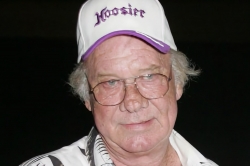
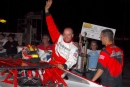
Former Mississippi dirt racer Don Hester, the Hall of Fame driver known as the Tupelo Flash who captured the first championship on Dirt Late Model racing’s longest operating series, died in his sleep Sunday at a Tupelo, Miss., nursing home after battling pneumonia that developed into sepsis. He was 84. His passing was confirmed by fellow Hall of Famer Jerry Inmon, a close friend of Hester’s.
“He was a good man,” said Inmon, of Bruce, Miss., who called Hester “like the A.J. Foyt” of northeast Mississippi’s racing scene. “He was one of the best friends I ever had.”
The 1983 Southern All Star Dirt Racing Series champion piled up more than 500 career victories on dirt, including a 51-victory season in 1979.
Among his noteworthy career Dirt Late Model victories were the 1977-78 Southeastern Winternationals at Volusia County Speedway in Barberville, Fla., the 1980 Boss 100 at Rome (Ga.) Speedway and the 1982 Tri-State Championship at Whynot Speedway near Meridian, Miss. The 2009 National Dirt Late Model Hall of Fame inductee also captured 1979’s lucrative National 100 at East Alabama Motor Speedway in Phenix City, Ala.
As Leesha Faulkner, a contributing columnist for the Daily Journal of Tupelo, Miss., wrote in a 2022 column, Hester’s “Tupelo Flash” nickname arrived around the same time Jerry Reed popularized “The Tupelo Mississippi Flash” in reference to Elvis Presley — only Hester made the moniker his own on dirt tracks across Mississippi, Alabama, Tennessee and Florida.
Hester had some Presley-esque fashion to him, too, as Johnny Stokes, another longtime competitor, fondly recalled his “flash.”
“He’d wear a diamond ring, and back before blue jeans had little designs on the rear pockets — nobody had done that — but Don, that’s what he was,” Stokes said. “He’d also wear these white shoes. He was known for those white shoes.”
Some of Hester’s earliest stories live in family and northeast Mississippi lore. Faulkner wrote that Hester’s brother, Dan, helped obtain the land for Tupelo Sports Arena, a dirt track built in 1949 just south of the railroad tracks on Old U.S. 78. Dan and nine other racing enthusiasts each put up about $1,500 to build the track, which operated until 1953. But when the track closed, Don Hester kept forging his own racing path.
His nephew, Mike Hester, told Faulkner that Don’s determination reflected in the family story of Hester turning Dan’s prized 1957 Chevy from the dealership lot into a roll-caged stock car while Dan was away on vacation.
“Don is the kind of person if he committed, he was going to go full blast,” Mike Hester told Faulkner. “He loved to win.”
Hester’s competitive nature, however, never seemed to strain his relationships. Inmon, Stokes and writer Tim Henry — whose first feature article was on Hester in Dirt Late Model Magazine in May 2001 — all shared the same sentiment: while Hester was a fiery competitor, “he’d always help other drivers,” Henry said.
“That’s the way he was,” Stokes said. “He’d help out anybody he could.”
Correction: Fixes dates of death.