

Best of the Quarter Century (2001-2025)
Trends, infuential figures of last 25 years
By Todd Turner
DirtonDirt managing editor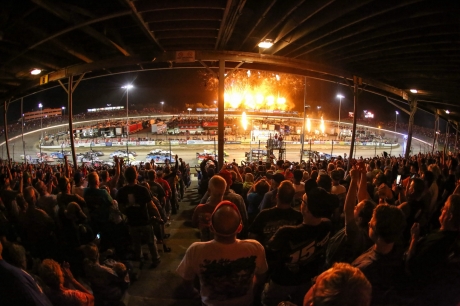
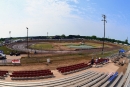
Eldora Speedway in one of the era's best images. (heathlawsonphotos.com)
In wrapping up our Best of the Quarter Century coverage, we’ve got four more Top 25 lists covering the era of Dirt Late Model racing from 2001-25 (also don’t miss our Top 25 photos from the era; Best of 2025 coverage index):
Trends and developments
What are among the biggest differences a time traveler from the turn of the century would discover? We look at 25 key changes evolving (some faster than others) during the generation (listed alphabetically):
Aerodynamics: Modern (and ever more skewed) body styles catch more air and create downforce that keeps cars stuck to the track — and makes “clean air” critical.
Aggressiveness: Logging laps, even in long-distance races, falls by the wayside as drivers push their machines to the limit virtually every lap in maximizing traction.
Crate engines: Budget-minded, turnkey powerplants arrive in the division, providing a cheaper entry point, a steppingstone for young and aspiring drivers and an explosion of new series.
Double-file restarts: First popularized by Mooney Starr’s Arkansas-based MARS circuit, restarting races side-by-side becomes ubiquitous.
Droop rule: Reining in rear deck heights (and making racing safer), the measurement eventually earns broad acceptance in high-profile racing, and gives winners one more postrace thing to fret over.
Eldora formats: Crown jewel events where time trials were once so critical ahead of a single night of competition now include multiple nights (and multiple features) with every-lap-matters point systems.
Engineering: Technology raises the bar on knowledge, making capable crew chiefs a hot commodity.
Graphics: Vinyl wraps gets fancier and fancier (with many teams changing up wraps frequently along with unveiling frequent special editions).
Hall-of-Fame offspring: Hall of Fame Fathers (Donnie Moran, Don O’Neal and Bob Pierce) watch, and help, Devin Moran, Hudson O’Neal and Bobby Pierce become superstars in their own right.
Haulers: Toterhome rigs and stacker trailers make life on the road easier for wide-traveling teams.
Indoor racing: Cody Sommer’s Kubota Gateway Dirt Nationals becomes a late-season juggernaut at The Dome at America's Center in St. Louis, carving out a unique place on the racing calendar.
Multiday events: Tracks stretch their biggest events over multiple days with camping, activities, concerts and non-racing entertainment for filling the free time.
Multicar time trials: Technology-assisted time-saving measure that makes a single car on the track during qualifying a distant memory.
National tours: Plural for the first time beginning officially in 2005 with the World of Outlaws and Lucas Oil providing two routes to stardom.
One-way radio communication: Raceceiver puts race director in ears of drivers, enhancing safety and saving time resetting lineups under caution.
Purse and points fund explosion: For a sport “stuck” on $10,000-to-win for decades, $50,000 purses abound with championships now worth what entire points fund paid years before.
Shock technology: Transition to oil-dampened from gas-dampened shocks means turning a few clicks instead of regularly swapping shocks (as well as a bigger investment).
Social media branding: Hunt the Front’s widespread popularity blazes the trail in building driver and team fan bases that follow every turn of the wheel and twist of the wrench.
Speedweeks evolution: Tight stretch of winter racing once anchored by lengthy weeks at East Bay and Volusia transitions with East Bay’s closure, stretching the Speedweeks definition of racing in Georgia and Florida from January through March.
Streaming: Live online coverage provides the once impossible ability to watch from home, opening contentious debate about its affect on the sport’s long-term health.
Tire issues: Era’s early years deals with Hoosier-Goodyear Tire Wars and later years see improvements in national tour-supported unified tire rule that reduces compounds.
Track closures: Significant tracks (I-80, East Bay, 411, Clarksville and more) fall by wayside as property often becomes far more valuable for commercial use.
Trade papers fold: Following mainstreams trends, printed racing papers mostly give way to online news organizations and social media.
Transponder scoring/live timing: Scoring loops and transponders make scoring a snap and puts live timing apps in the hands of crews and spectators.
Unified body rules: Relative consistency and agreement among highest-profile tours ease tech inspection and burdens on tin-snipping crew members.
Influential figures
The top 25 track owners, promoters, team owners, manufacturers, media members, sponsors and other personalities who made a mark during the era (listed alphabetically):
Keith Berner (Accu-Force Dyno and Testers): Former driver a pioneer in the spring smasher era.
Scott Bloomquist (team owner): The Hall of Famer transcended the sport, often at the center of action, decisions and stories.
Brian Carter (World Racing Group CEO): Guides one of key short-track racing organizations through the era.
Ray Cook (driver/promoter): Behind the wheel, with a headset or a tape measure, the droop-rule proponent has finger on the sport’s pulse.
Matt Curl (Fairbury Speedway co-owner): The essence of a modern-day promoter with thoughtful approach to bettering tracks, tours and major events.
Hoosier Tire South (Charles Roberts, David Miller and Jimmy Thomas): Often behind the scenes but major regional players with series, organizations and rules.
Hunt the Front (team owners/series founders): Timing, hard work, social media savvy — and always-running cameras — put the team on the must-see TV list (with evolutions into tours and more).
Joe Kosiski (I-80 Speedway): Along with hard-working family, built I-80 into a player through relentlessness, forging the Silver Dollar Nationals as an annual spectacle.
The Labontes (team owners): One of dirt’s critical NASCAR-connected families evolves with the beginnings of now-powerful Longhorn Chassis.
Stan Lester (Fastrak): Plays key role in establishing Crate Late Model racing.
Forrest Lucas (Lucas Oil Products): Motorsports benefactor’s investments in motorsports include a Dirt Late Model tour and the picturesque Lucas Oil Speedway.
Michael Rigsby (DirtonDirt/FloRacing): Ushers short-track media into the online (and more professional) realm, pioneering streaming and connecting Flo to our world.
Mark Richards (Rocket Chassis): The consummate team owner and major player, no idea in the sport becomes a thing without a phone call to Shinnston, W.Va.
Kevin Rumley (K&L Rumley Enterprises/Longhorn): Developer of the controversial (and banned) “Device” at the forefront of Dirt Late Model racing’s technology-focused era.
Shanon Rush (Hoosier Racing Tire): A liaison between the tire behemoth and drivers, he’s navigated rule changes, safety issues (and complaints) with aplomb.
Bob Sargent (promoter): Old-school Hall of Famer’s no-nonsense style not universally loved, but it’s aged well.
Rick Schwallie (Lucas Oil Series): Key figure in tour’s modern era of richer purses and points fund as well as a voice in unified rules.
Roger Sellers (Double Down Motorsports/Smoky Mountain Speedway): Dual role of championship team owner and track owner puts him at forefront.
Roger Slack (Dirt Track at Charlotte and Eldora Speedway): Makes the most of key roles, bringing major events into the modern era at the sport’s showplaces.
Cody Sommer (promoter/team owner/chassis builder): Always swinging big and often connecting, he turns Gateway’s indoor racing into the next big thing.
Mooney Starr (MARS/Batesville Motor Speedway): Innovator and promoter never afraid to try something others would never consider.
Tony Stewart (Eldora Speedway): Taking baton from Earl and Berneice Baltes, invests in dramatic modernization of Eldora Speedway.
Johnny Stokes (Magnolia Motor Speedway): Veteran driver becomes Dr. Dirt and guides Columbus, Miss., track(s) to vast success.
Ronnie Stuckey (Stuckey Enterprises): Crew chief and chassis builder with key understanding of what’s important in the sport.
Mike Vaughn (Crate Racin’ USA): Establishes Crate Late Model tour and weekly points that expands into Southeastern-dominant organization.
High-profile tracks
Twenty-five dirt tracks (a few no longer with us) that have played an integral role in the era:
Batesville Motor Speedway, Locust Grove, Ark.: Home of the Topless 100 amid thriving area for dirt racing.
Brownstown (Ind.) Speedway: Staple on Lucas Oil Series with long-running Jackson 100.
Cedar Lake Speedway, New Richmond, Wis.: USA Nationals home is region’s dominant track.
Cherokee Speedway, Gaffney, S.C.: Old-school in a good way, a visit feels like a trip to NASCAR’s roots.
Davenport (Iowa) Speedway: Less the half-mile than the quarter-mile, which consistently provides close-quarters action.
The Dirt Track at Charlotte, Concord, N.C.: The World Finals becomes a worthy season-ender, drawing throngs of competitors and fans at the sparkling oval.
The Dome at America's Center, St. Louis, Mo.: Hosting an event literally unlike an other at a track that exists just a handful of days each year.
East Bay Raceway Park, Gibsonton, Fla.: The closing of the beloved track with the unpredictable surface left a hole in Speedweeks.
Eldora Speedway, Rossburg, Ohio: The sport’s epicenter that’s evolved from simply a great racetrack to a marvelous facility.
Fairbury (Ill.) Speedway: The FALS Prairie Dirt Classic has become a bucket-list event, but a barnburner feature is always just a Saturday away.
Florence Speedway, Union, Ky.: A steady climb to the top of the heap of Bluegrass State tracks with a North-South 100 that’s among the sport’s biggest events.
Golden Isles Speedway, Brunswick, Ga.: No longer the tight ribbon of 150 mph speeds, the shortened oval is still a Speedweeks staple.
I-80 Speedway, Greenwood, Neb.: Established the Alphabet Soup Classic and then Silver Dollar Nationals to buoy region before track’s closure.
Knoxville (Iowa) Raceway: Late Models play second fiddle to sprints in big picture, but Lucas Oil Nationals stands as state’s biggest event for the division.
Lernerville Speedway, Sarver, Pa.: Era-arriving Firecracker 100, along with various specials and solid weekly program, elevates track’s standing.
Lucas Oil Speedway, Wheatland, Mo.: No-expenses-spared track with all the touches is a joy for competitors and fans alike.
Magnolia Motor Speedway, Columbus, Miss.: The track patterned off West Plains Motor Speedway gets it right with slick-track racing that shines in Magnolia State.
Oakshade Raceway, Wauseon, Ohio: Grassroots to the core, a still-solid weekly program and DIRTcar Summer Nationals Birthday Race are among highlights.
Port Royal (Pa.) Speedway: Sprint-car stronghold elevates Late Models for major (and weekly) events.
River Cities Speedway, Grand Forks, N.D.: A WISSOTA mainstay with the lucrative and long-running John Seitz Memorial along with competitive weekly action.
Smoky Mountain Speedway, Maryville, Tenn.: Revived (and shortened) to host many major events on multiple circuits.
Talladega Short Track, Eastaboga, Ala.: In shadow of big NASCAR track, but in spotlight among state’s dirt tracks.
Volunteer Speedway, Bulls Gap, Tenn.: High-banked home of some of Tennessee’s all-time best.
Volusia Speedway Park, Barberville, Fla.: The World Racing Group’s jewel is an historic fixture at Speedweeks where memories are often made.
Willamette Speedway, Lebanon, Ore.: The Clair Arnold-promoted, overflowing-car-count glory days have waned, but it's still a significant West Coast outpost for Late Models.
Notable crew chiefs
Twenty-five crew chiefs who made drivers better, made a name for themselves and helped teams to major victories (listed alphabetically with some drivers they worked in crew chief role):
Robby Allen (Rick Eckert/Steve Casebolt/Gregg Satterlee)
Rob Blair (Max Blair)
David “Fatboy” Bryant (Scott Sexton/Billy Ogle Jr./Tommy Kerr/Donald McIntosh)
Anthony Burroughs (Earl Pearson Jr./Don O’Neal/Hudson O’Neal/Ricky Thornton Jr.)
Jason Durham (Jonathan Davenport/Hudson O’Neal)
Randall Edwards (Billy Moyer/Darrell Lanigan/Josh Richards/Brandon Sheppard/Tyler Erb)
Cory Fostvedt (Steve Francis/Frank Heckenast Jr./Jimmy Owens/Jonathan Davenport)
Chris Fox (Jimmy Owens)
Zach Frields (Brian Birkhofer/Rick Eckert/Ricky Thornton Jr.)
Tyson Gheer (Brian Harris/Justin Kay/Dylan Thornton)
Vinny Guliani (John Anderson/Kyle Strickler
Jeff Gullett (Justin Rattliff/Jason Jameson)
Austin Hargrove (Bart Hartman/Frank Heckenast Jr./Davey Johnson)
Tommy Hicks (Duayne Hommel/Scott Bloomquist)
Kirk Loudy (Duayne Hommel/Brian Birkhofer/Kaede Loudy)
Heather Lyne (Dennis Erb Jr.)
Cody Mallory (Scott Bloomquist)
Chris Mars (Jimmy Mars)
Shane McDowell (Dale McDowell)
Danny Myers (Scott Bloomquist)
Steve Norris (Billy Moyer)
Jason Palubicki (Dan Schlieper/Kent Robinson/Jason Feger)
Bob Pierce (Bobby Pierce)
Kevin Rumley (Steve Shaver/Jonathan Davenport/Kyle Larson)
Danny White (Rick Eckert/Brandon Sheppard/Hudson O’Neal)
Gary Winger (Tommy Kerr/Ashton Winger)
Honorable mention: Chris Burton, Jimmy Cabrell, Taylon Center, Chad Curran, Danny Dishman, Jason Fitzgerald, Tommy Grecco, Josh Gunter, Jason Jameson, Scott “Schoolboy” Smith, Mark Saul, Phillip Snellen, Junior Wisegarber.
Editor's note: With contributions from DirtonDirt staffers Kevin Kovac, Kyle McFadden and Aaron Clay along with contributor Kelley Carlton.