

Inside Dirt Late Model Racing
Column: Post-injury, Norris back in groove

Michael Norris has blasted around the extreme top edge of the third turn at his hometown Lernerville Speedway in Sarver, Pa., countless times. It’s one of his specialties, one that’s helped carry the 34-year-old to dozens of victories and five Super Late Model points titles since launching his driving career as a teenager in the late 2000s.
But last year, on Aug. 29 in a Lucas Oil Late Model Dirt Series-sanctioned preliminary feature for the Hillbilly 100, his familiar high-side move went awry. Just four circuits into the 40-lap race the right-rear of the car Norris was piloting — a machine owned by his brother-in-law Nico Dabecco — slipped over the wall-less berm as he entered the third corner, throwing it into a wild flurry of flips down the embankment.
“I feel like I entered turn three like I’ve done one million times there,” Norris commented at the time, “and it just didn’t stick like it normally does.”
It was the most vicious wreck Norris had ever experienced. The Rocket Chassis was mangled; most notably, the left-front portion of the roll cage halo was pushed down from an especially hard impact with the ground as he gyrated through the air. Norris was shaken up, suffering a concussion though he declined a trip to the hospital after being evaluated by the track’s safety crew in his hauler after the accident.
The crash also abruptly ended his 2025 season. With his wife, Jessi, due to deliver the couple’s second child a month later, real-world sensibilities entered the mind of the talented but part-time racer.
“It really put things in perspective,” Norris said during the Lernerville’s recent Firecracker 100 weekend. “I felt terrible for my wife because it really worked her up.”
Now some 10 months removed from the ordeal, Norris is back racing and running as competitively as ever. The son, Luke, his wife delivered last October is 8 months old, growing up fast alongside his brother Jack, who’s 2 and a half. All seems well again for Norris after the setback, but it was a scare that reset his outlook.
Norris said the concussion he sustained in the wreck wasn’t considered serious, but it left him dealing with pesky, annoying symptoms for several weeks after the fact. He would feel dizzy and nauseous, especially at night, and it led him to seek medical attention from a specialist.
One of the most renowned authorities on concussions happens to be based in his backyard, so Norris scheduled an appointment at the University of Pittsburgh Medical Center Lemieux Sports Complex in Cranberry Township, Pa., with Dr. Micky Collins, the director of the UPMC Sports Medicine Concussion Program. Collins famously helped Dale Earnhardt Jr. recover from multiple concussions, including severe injuries in 2012 and ’16 that forced the NASCAR driver to miss significant time on the track.
“I went there for an evaluation and he said, ‘You definitely have a concussion. It’s a low-grade concussion, but I think your inner ears are the problem,’ ” Norris said. “It ended up being my inner ears were out of whack. I don’t if you've ever heard of that. I thought it was a fluke, but I would lay down and then look at my pupils and they’d start going like this (shaky). Something wasn’t right.”
Norris was plagued by a concussion-related condition caused by calcium carbonate crystals that were effectively knocked out of place and moving within his inner ear. He found relief from the treatment the doctor and his therapists offered him: a specific exercise in which he would lay on his side and slowly rotate his head in a series of steps that help “guide” displaced calcium crystals out of the inner ear canals so they no longer trigger dizziness.
“These crystals in your ear … it sounds so weird,” Norris said. “But doing what they had me do, it made a believer out of me. The symptoms went away.”
Come this spring, though, Norris still had to prove to himself that he could overcome the mental side of returning to the driver's seat. That moment arrived March 21 when he entered his first race since the accident at Pittsburgh’s Pennsylvania Motor Speedway in Imperial. He was again driving a car fielded by Dabecco.
“I’m like, ‘All right, I’m gonna go out here in hot laps and I’m gonna never lift. If I never lift, I know I’m OK,’ ” Norris said.
Norris passed that initial speed test. He went on to win the feature and its $4,000 top prize, proving to himself that the accident wasn’t sticking in his head.
“And then the first race here (at Lernerville), like the first lap, maybe I was a little timid up on that top,” Norris said of his return to his home track. “Then I get mad enough, I just get up there. I knew I was OK.”
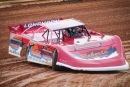
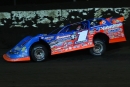
While Norris entered the Firecracker 100 weekend with only five starts on his 2026 ledger, he was confident having just won his second feature of the season the previous week in a weekly show at Lernerville. That triumph came in his debut run with a new family-owned Rocket XR2 Chassis carrying his familiar No. 72, albeit with a slightly different color scheme than he typically sports (the yellow accenting his red and black has been replaced with some gold).
Norris is as tough as any racer as you’ll find in Super Late Model racing’s regional ranks, especially when running on his home turf. He’s won two full-field Firecracker 100 preliminary features under World of Outlaws Late Model Series sanction (in 2018 and ’19) and has performed well against national-level competition on other big stages, including PPMS Pittsburgher event and Eldora Speedway in Rossburg, Ohio (three career World 100 final starts). But he also possesses a self-awareness of his shortcomings when taking on the sport’s best — most notably, the fact that he doesn’t race anywhere near as much as the touring regulars.
“I came here after running scrap all day,” Norris, who works at his family’s Millerstown Pic-A-Part business, said with a laugh after finishing fourth in a Friday Firecracker 100 semifeature. “I’m not working on my car all day. This was only my sixth race of the year.”
Norris knows he has equipment equivalent to the big boys. It’s a matter of figuring out how to set it up correctly, making the right tire calls and not making mistakes on the track. That’s a tall task, however, and Norris feels like he’s been struggling to put all the facets of his racing game together in recent years.
“It’s hard because when you do qualify well in the past and win heats and you start up front, and then you start losing grasp of that a little bit, it starts getting frustrating,” Norris said. “But the sport changes so much and everybody’s so good. Like literally track position and qualifying, it changes like so quick.”
The Firecracker 100 was a huge building block for Norris. After finishing a solid fourth in the semifeature, he appeared headed toward his best performance ever in Saturday’s finale — his 10th career start in an event he first entered as a 17-year-old in 2009 — as he climbed from the 12th starting spot to fourth place. He faded in the late stages and settled for seventh as his 3-compound right-rear tire gave out racing against a field that saw the vast majority of cars on a harder 4-compound tire, but he was still satisfied.
“I honestly felt very relevant for like 75 to 80 laps,” Norris said. “I haven't felt that, like, relevant, where I was passing cars, in a while. I wasn’t even really hustling it that hard. Even when I was on the top (lane), I was only maybe running 80 percent. You know, the restarts, you’d turn the wick up a little, but I wasn’t pushing it.
“I think we were one of the only ones on a 3 right-rear. We always run a 4 here. Even in 25 laps, we put a 4 on the right-rear. And then we always get our butts kicked in this race by 3’s, and everyone said they were going to be on 3’s (for the 100-lapper). It was crummy and dirty, and I’mm like, ‘Well, we’ll try it,’ but everyone ended up on 4’s. The car was really comfortable until the end when it started going away.”
Norris paused, and then added with a smile: “This is my seventh race this year, so I could have just been getting wore out. You never know.”
While Norris fell short of his career-best Firecracker finish of fifth (in 2020 when the feature was 50 laps to accommodate a live television broadcast), he was seventh for the fourth time in his career. He also picked up a jolt of energy that has renewed his enthusiasm for racing.
“I would’ve liked to stay fourth because it probably would have done my best finish, but I’m happy,” said Norris, who credited Rocket Chassis co-owners Mark Richards and Steve Baker for their immense help in fine-tuning his new car. “I feel really comfortable in this car now. I'm pretty happy with it. The car’s really good. We’re just still kind of learning it — we switched up our shock program too, we’re on Fox Shocks now, so we’re trying to learn. But we’re close.
“I feel pretty good about this year. I feel better now.”
Norris noted that he still needs to “get better down low” because “you don’t win the big races just running the top.” He understands honing his skills in his mid-30s will continue to be difficult because he can’t race a heavy schedule, but he’s anxious to be more active for the remainder of the 2026 campaign. A trip to Florence Speedway in Union, Ky., for the Sunoco North-South 100 and to Eldora’s World 100 are in the mix.
“Absolutely I want to race more now,” said Norris, who had his one brief brush with full-time racing in 2019 when he spent the second half of the Lucas Oil Series season driving for Clint Bowyer as a fill-in for the sidelined Don O’Neal. “We got some big races on the schedule. I’d love to make it to Florence. We’re gonna go to Eldora for the World this year — and if this car’s as good as it and I can feel as comfortable as I do out there, I think we'll be OK.
“I’m not gonna race for a living,” he added. “That ship has sailed. That’s not happening for me. But we’re gonna keep racing as much as we can, and right now I’m feeling pretty good about where we’re at.”